Thursday, May 5, 2016

Plants from Kartuz and 1 more germinating Sonchus

Yesterday, an order from Kartuz came in. This was my first time ordering from them, so it was a bit of a test to see the quality of the plants that came in. They also had a few plants which I hadn't seen available anywhere else.

The packaging was impressive and obviously great care had been taken to ensure they arrived safely. However, I was a bit disappointed with the Passiflora holosericea and Passiflora 'Anastasia' I ordered. The leaves are all yellow and look very chlorosed. I am not sure if either of them will survive but hopefully.Displaying IMG_2760.JPG

Passiflora holosericea looking a bit rough


Passiflora 'Anastasia' looking even worse

The other plants look a bit better:

Hoya mindorensis
Acanthus sennii from Ethiopia
Brillantaisia owariensis
Impatiens niamniamensis 'African Queen'

I also noticed the beginning signs of germination from Sonchus fruticosus!! This is my second favorite Sonchus (S. leptocephalus being my favorite but it is still unavailable from Rare Plants). 

Sonchus fruticonsus beginning to sprout
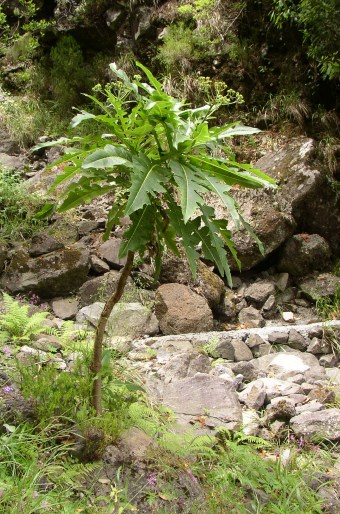
Sonchus fruticosus in the wild (image from botany.cz)


Displaying IMG_2760.JPG

Wednesday, May 4, 2016

Sweet sweet germination of Euphorbia, Echium, and Sonchus

Germination for the seeds from Rare Plants has been amazing. Extremely high germination rates from every species that has started germinating. There may be a bit of a hassle to order from since I have to get a USDA permit and it just took months for the seeds to even make it to the USDA inspection station. But the benefits far outweigh the costs as they have many seeds which are impossible to find, particularly with Canary Island natives.

Echium onosmifolium has been really beginning to sprout. I would take a guess that 80% of the seeds germinated within a week! This Echium grows to about 3 feet tall with dark spiny leaves and beautiful white flowers. It looks a bit like Echium fastuosum, which is relatively common in Los Angeles. But the flowers are white and the leaves look darker and skinnier.
Echium onosmifolium sprouts

Echium onosmifolium in the wild (image from stridvall.se)
Another plant which has begun to sprout is Euphorbia tuckeyana. Euphorbia is such a huge genus with representatives looking everywhere from a giant cactus to a minute moss. Euphorbia tuckeyana looks to me like a shrubby spurge. A fair amount of mold has grown with the seeds on the paper towel but it does not seem to be a problem for the seeds yet. I will transplant to individual pots in a few days, which should remedy the problem.


Euphorbia tuckeyana seedlings

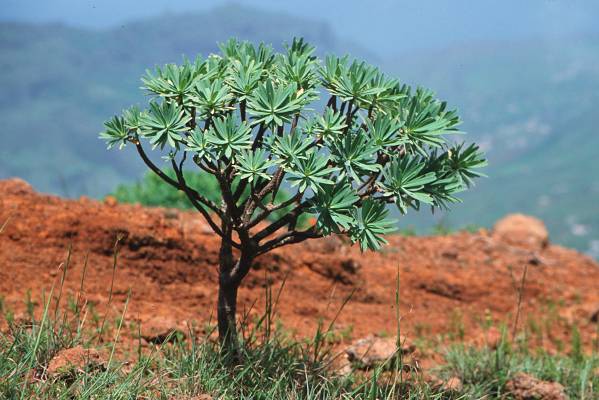
Euphorbia tuckeyana in habitat (from alewand.de)

The Sonchus were the first to germinate, showing their tiny white root tips just a few days after putting them in their bags. They tiny sprouts might prove to be difficult to plant, so I am thinking I will move them to individual containers before they show their first leaves. Sonchus acaulis, congestus, and hierrensis have all begun to germinate!

Sonchus hierrensis sprouting

I am rapidly developing a nice collection of giant dandelions. I have seedlings of Sonchus acaulis, congestus, and hierrensis, plus plants of Sonchus palmensis and Sonchus canariensis. I have a few more seeds which need to germinate, which should leave me at about 8 or 9 different Sonchus varieties. Its unfortunate that Sonchus can only grow a few places in the USA, preferring cool but not cold, and humid. This basically leaves me to the California coast and a small part of the Oregon coast. Happy to be in LA for now but who knows what the future will hold.


Monday, May 2, 2016

More Seed Sowing plus Aristolochia and Sonchus Germination!

I put the rest of the seeds from Rare Plants into Zip-Lock bags. It was a pretty time consuming process, taking almost an hour to sow the remaining 12 plant varieties. Here's hoping for good germination rates!

More seeds for the sowing
If the seeds I put in Zip-Lock bags a week ago are any indicator, I should have germination in about a week.

Looks like I will be getting good germination rates with these Sonchus congestus seeds
First sings of life from the seeds ordered from Brazil Plants. A single Aristolochia chamissonis seed has let out a root tip! Very exciting. Hopefully this is just the beginning for the Aristolochia seeds.

Aristolochia chamissonis sprouting
Hooray for a ton of Sonchus and Echiums soon to be added to my collection!

Tuesday, April 26, 2016

Sowing Seeds from Rare Plants, Plant World Seeds, and Silverhill

A few days ago I got some more seeds in the mail. Since I got such a huge variety of seeds (~20 different types), I decided to go back to using the Zip-Lock bag method, since it takes up less space.
7 types of seeds ready for germination

The 7 types are:
  • Echium decaisnei
  • Echium onosmifolium
  • Euphorbia tuckeyana
  • Leucospermum sp.
  • Sonchus acaulis
  • Sonchus congestus

I got a bunch of different Sonchus and a few of the same species from different collection locations. I am obsessed with Sonchus and Echium right now!

Wednesday, April 13, 2016

Starting off some fern spores

So my first try at attempting to grow fern spores, with Cyathea lepifera, turned out to be a no go. After only a couple weeks, gray-blue patches of mold can be seen on the surface of the peat. A few days ago I got spores for Blechnum tabulare, Cyathea medullaris, Cyathea dregei, and Dicksonia fibrosa. I scoured the recycling bin and came across a bunch of containers which looked like good germination chambers.

First I started boiling some water and rinsed out the containers with soap. I filled each container with about an inch of perlite then poured boiling water over it. I then layered some peat moss on the top and wet it with the boiling water. I then stuck the container into the microwave and microwaved for 10 minutes. One of the lids of the plastic containers melted and could no longer fit over the container, so I used plastic wrap to cover it. They were all stuck in the freezer for about an hour then the spores were layered on the surface. They are in a sunny spot on a table in my growing room. No mold, please!

Spores from B and T ready to germinate!
Blechnum tabulare spores ready to go


Friday, April 8, 2016

Cacti seedlings, Cyathea dealbata, and more seedlings

More Eulychnia breviflora seedlings have emerged. And now I have one more tiny Epithelantha bokei sprout.
Eulychnia on bottom right, Epithelantha just above it.
I got a new type of tree fern, Cyathea dealbata. Ordered it off of eBay from the Fern Factory in Fullerton. When mature, the fronds have a fantastic white underside. Really excited for it to get big and lush!

Cyathea dealbata on my windowsill
The Aloe helenae have really started springing up now! I have over 20 little seedlings starting to grow!


Aloe helenae seedlings
The Yucca thompsoniana have also started to look like grass. I would be thrilled if they maintained their growth rate as they got larger. Unfortunately, yucca are notoriously slow growing.

Yucca thompsoniana seedlings peaking out of their container


Sunday, April 3, 2016

Dividing Agave, Aloe helenae update, Cyathea spores, and a Platycerium

A lot has happened in my collection the past few days. I got some seedling trays so that I could divide the Agave seedlings. Got some Cyathea lepifera spores to try my hand at fern germination. A bunch of Aloe helenae seedlings have popped up. And I got a new fern: Platycerium ridleyi.

Divided out the individual Agave victoriae-reginae seedlings (25 total). That should be a 100% germination rate!

The spores look like dust.
I ordered some Cyathea lepifera, a type of tree fern, from eBay. The seller was in southern California, so hopefully they were freshly harvested from one of his plants, as was indicated on the eBay listing. Using the YouTube video released by the Fern Factory, I sterilized a plastic container using 70% strength isopropal alcohol. Perlite was sterilized in a microwave for 7 minutes then layered around 2 inches thick in the bottom of the plastic container. Some peat moss was wet then sterilized in the microwave for 7 minutes. I layered the peat on top of the perlite, and poured boiled water over the peat and perlite. After the whole thing cooled down, I sprinkled the spores on the top of the peat. The container was closed and is currently sitting in my room. Hopefully in a few months I will see prothalli.


Look at all those little Aloe helenae seedlings!
It looks like the Aloe helenae seedlings are making some good progress. Although, the supplier said there were 100 seeds, so it wouldn't be a very good germination rate if this is all I get. I am happy with as many as I got but would be happier with more.
Platycerium ridleyi looking good
I love the staghorn ferns (Platycerium) and see them all around the place here in Los Angeles. Though I have had a hard time finding any other than the common Platycerium bifurcatum. I decided to order this guy off of eBay and am pretty happy with what I got. It looks really healthy and haven't show any signs of stress so far (I got it a few days ago). I have sprayed it here and there, but read that it should be kept on the drier side. It is located in front of a window which I keep open all the time, so gets any sort of cross breeze coming through my space.